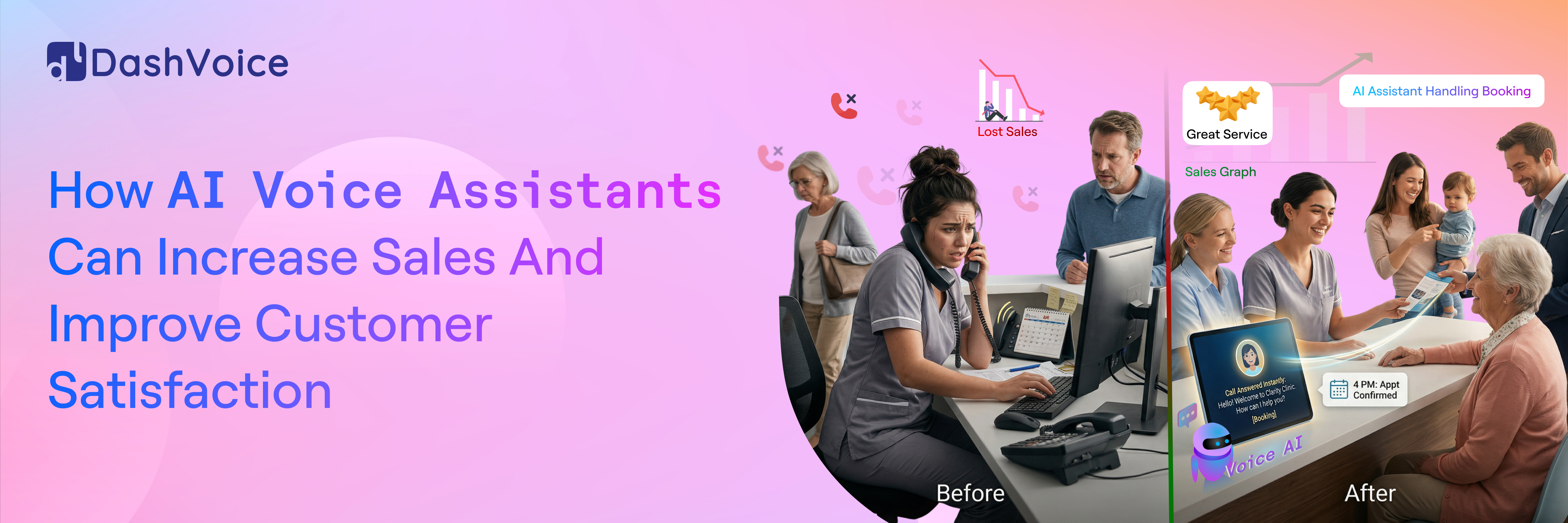
In this guide, explore how voice AI reduces friction, captures high-intent customers, and delivers personalized experiences that drive growth and engagement.
Introduction
What Are AI Voice Assistants, Really?
- Understand intent, not just words
- Respond in a natural, human-like way
- Handle complex, multi-step conversations
- Learn from past interactions
How AI Voice Assistants Increase Sales
1. They Remove Friction from the Buying Process
Every extra step in a customer journey increases the chances of losing a sale.
Customers often drop off because:
- They can’t find information
- They don’t get quick answers
- The process feels slow
Voice AI enables instant responses to questions like availability, pricing, and delivery—helping customers decide faster.
Faster decisions = higher conversions.
2. They Capture High-Intent Customers in Real Time
When customers reach out, they are often ready to act.
Voice AI can identify buying signals, recommend products, and guide users toward a purchase—turning intent into revenue.
3. 24/7 Availability Means No Missed Revenue
Voice AI operates around the clock—handling inquiries during peak times and even when teams are offline.
This ensures no missed opportunities, especially for ecommerce and retail businesses.
4. Personalized Conversations Drive Better Conversions
AI voice assistants can access customer data to deliver personalized interactions.
This improves trust, engagement, and ultimately purchase decisions.
5. Voice Commerce Is Growing Fast
Customers are increasingly using voice to search, compare, and purchase products.
- “Order this again”
- “Find me the best option”
- “Book this service”
Businesses adopting voice commerce early gain a competitive advantage.
How AI Voice Assistants Improve Customer Satisfaction
1. Instant Responses, No Waiting
Voice AI eliminates hold times and queues, providing immediate assistance.
This significantly improves customer satisfaction (CSAT).
2. Consistent and Accurate Information
AI ensures standardized, accurate responses across all interactions.
This consistency builds trust and improves customer experience (CX).
3. Multilingual and Inclusive Support
Voice AI supports multiple languages and regional dialects, making interactions more accessible.
4. Seamless Omnichannel Experience
Customers interact across channels like calls, WhatsApp, apps, and websites.
Voice AI ensures continuity and context across all touchpoints.
5. Faster Issue Resolution
AI resolves common queries instantly and routes complex issues efficiently.
This reduces frustration and speeds up problem resolution.
The Hidden Advantage: Conversation Data
- Transcribed
- Analyzed
- Converted into actionable insights
Real-World Use Cases
Retail
- Product discovery and recommendations
- Stock availability checks
- Upselling and cross-selling
Customer Support
- Handling FAQs
- Managing order-related queries
- Reducing support workload
Service Businesses
- Appointment booking
- Follow-ups and reminders
- Lead qualification
Conclusion
- Convert more customers
- Support them better
- Learn from every interaction