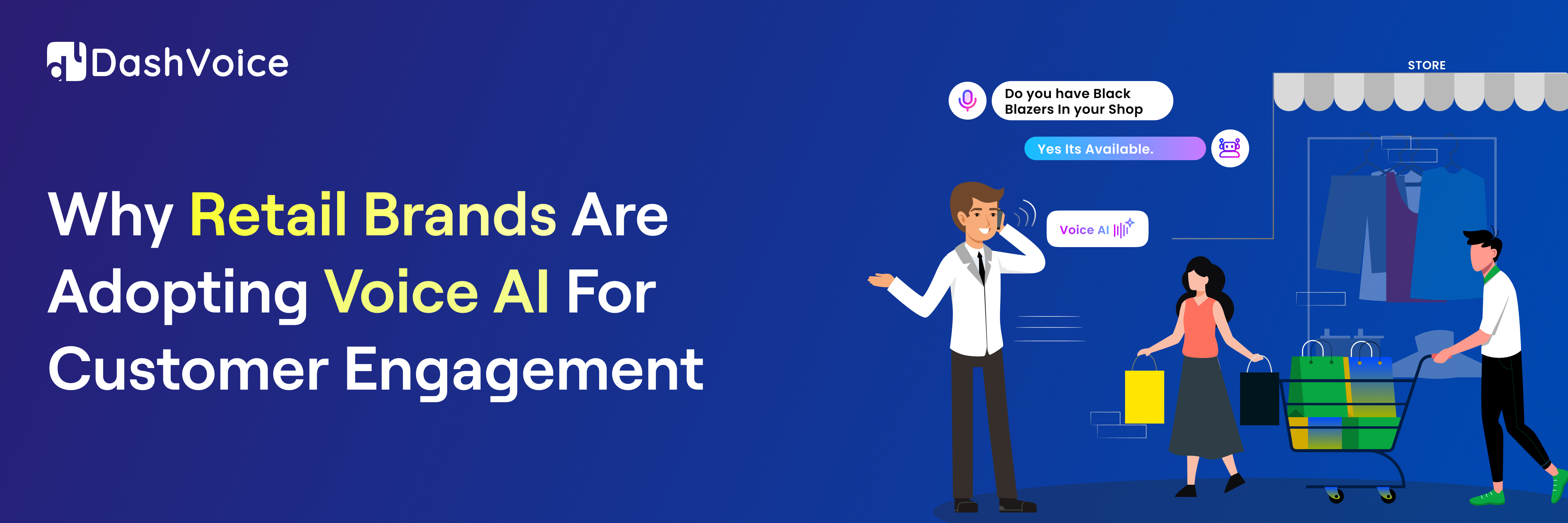
From instant responses to personalized recommendations, voice AI is helping businesses create seamless and engaging retail experiences that drive both satisfaction and sales.
Introduction
The Changing Nature of Customer Engagement in Retail
- Customers discover products online
- Compare options
- Call or message for details
- Visit stores with clear intent
What Is Voice AI in Retail?
- “Do you have this product in stock?”
- “What are your store timings?”
- “Can you help me find the best option?”
Why Retail Brands Are Adopting Voice AI
1. Customers Expect Instant Answers
Retail is time-sensitive. Delayed responses can mean lost sales.
Voice AI helps brands respond instantly, reduce wait times, and handle multiple queries simultaneously.
2. High Volume of Customer Queries
Retail brands handle repetitive queries daily—availability, pricing, location, and order status.
AI-powered automation helps manage this scale efficiently without overloading teams.
3. Bridging Online and Offline Experiences
Customers move between online discovery and offline purchase.
Voice AI ensures consistent information across all touchpoints, creating a seamless omnichannel experience.
4. Improving In-Store Experience
Voice AI can assist both customers and staff inside stores.
It reduces dependency on manual processes and enhances overall CX and efficiency.
5. Cost Efficiency Without Compromising Experience
Scaling support teams is expensive, especially during peak seasons.
Voice AI enables brands to handle more interactions without increasing costs.
6. Personalization at Scale
Voice AI uses customer data to deliver personalized recommendations and interactions.
This improves engagement and increases conversion rates.
How Voice AI Drives Better Customer Engagement
- Start conversations instantly
- Guide customers through decisions
- Provide relevant suggestions
- Reduce effort for customers
The Role of Voice in Modern Retail
- Speaking instead of typing
- Asking instead of searching
- Expecting instant responses
Real-World Impact on Retail Businesses
- Faster response times
- Higher customer satisfaction (CSAT)
- Increased store visits
- Better conversion rates
- Reduced support workload
Challenges to Consider
- Integration with existing systems
- Accuracy and training of AI models
- Handling complex or emotional queries
- Data privacy and compliance
The Future of Voice AI in Retail
- More human-like conversations
- Better multilingual capabilities
- Deeper system integrations
- Smarter real-time recommendations
Conclusion
- Engage customers more effectively
- Respond faster
- Improve overall CX
- Drive more sales